Simplifying data access: Unifying 3 endpoint products into 1
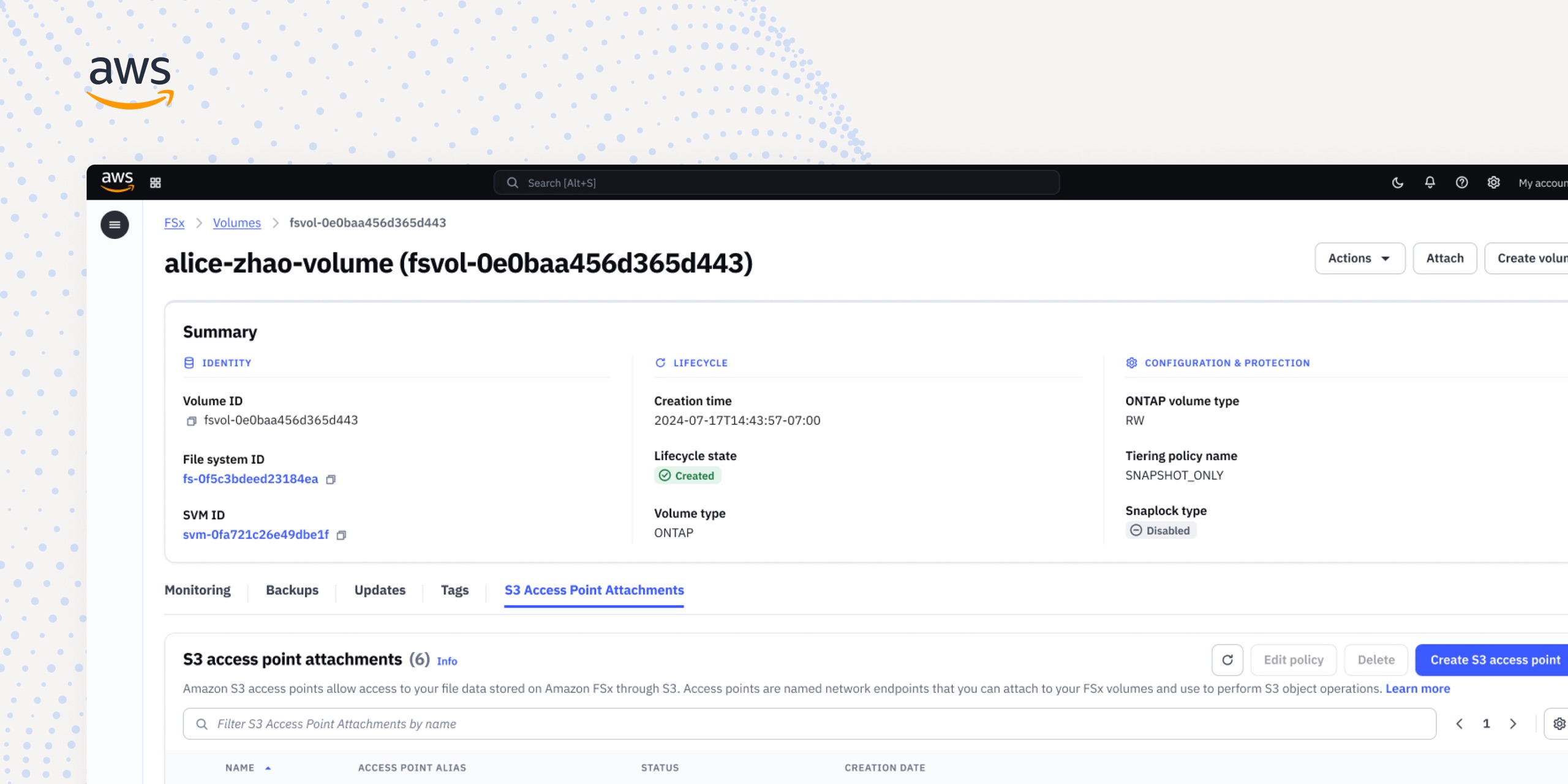
Customers were managing storage infrastructure across three separate consoles by repeating the same setup tasks, with no unified way to access data stored in different storages. I led the UX for a cross-functional team of 10, designing a cohesive console experience that unified setup and access across all three services.
Launched at AWS re:Invent 2025, the unified console experience cuts cross-service infrastructure setup to a single guided flow, allowing customers to scale access for large datasets in seconds.
01Who and why
Customers spent months building and maintaining custom pipelines just to access data across three separate storage consoles. Two personas and constant context-switching made the case for one unified data access experience.
Research
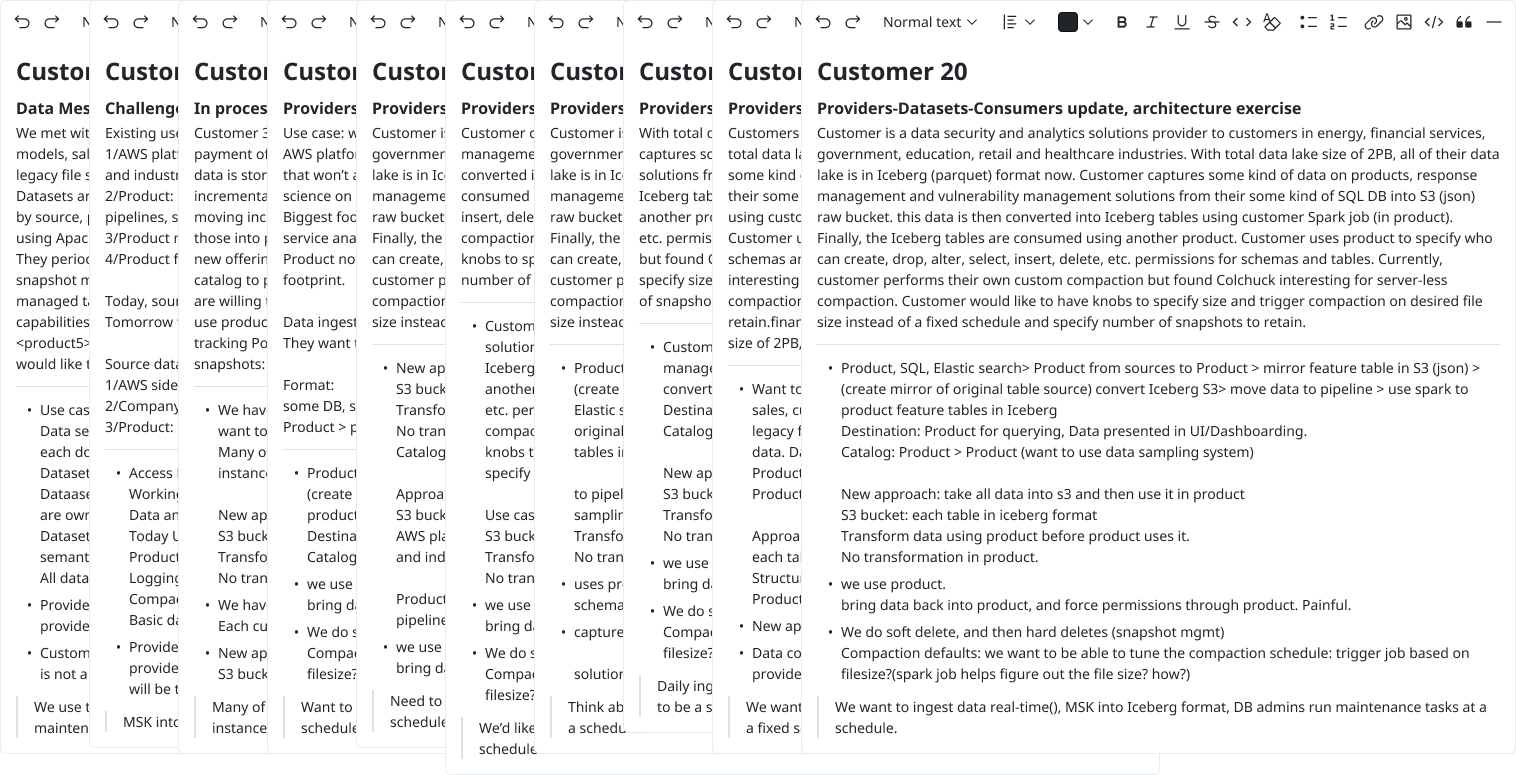
I synthesized 6 customer calls, 3 sales calls, and 30+ survey responses to map two personas, their journeys, and their core pain points.
Target personas
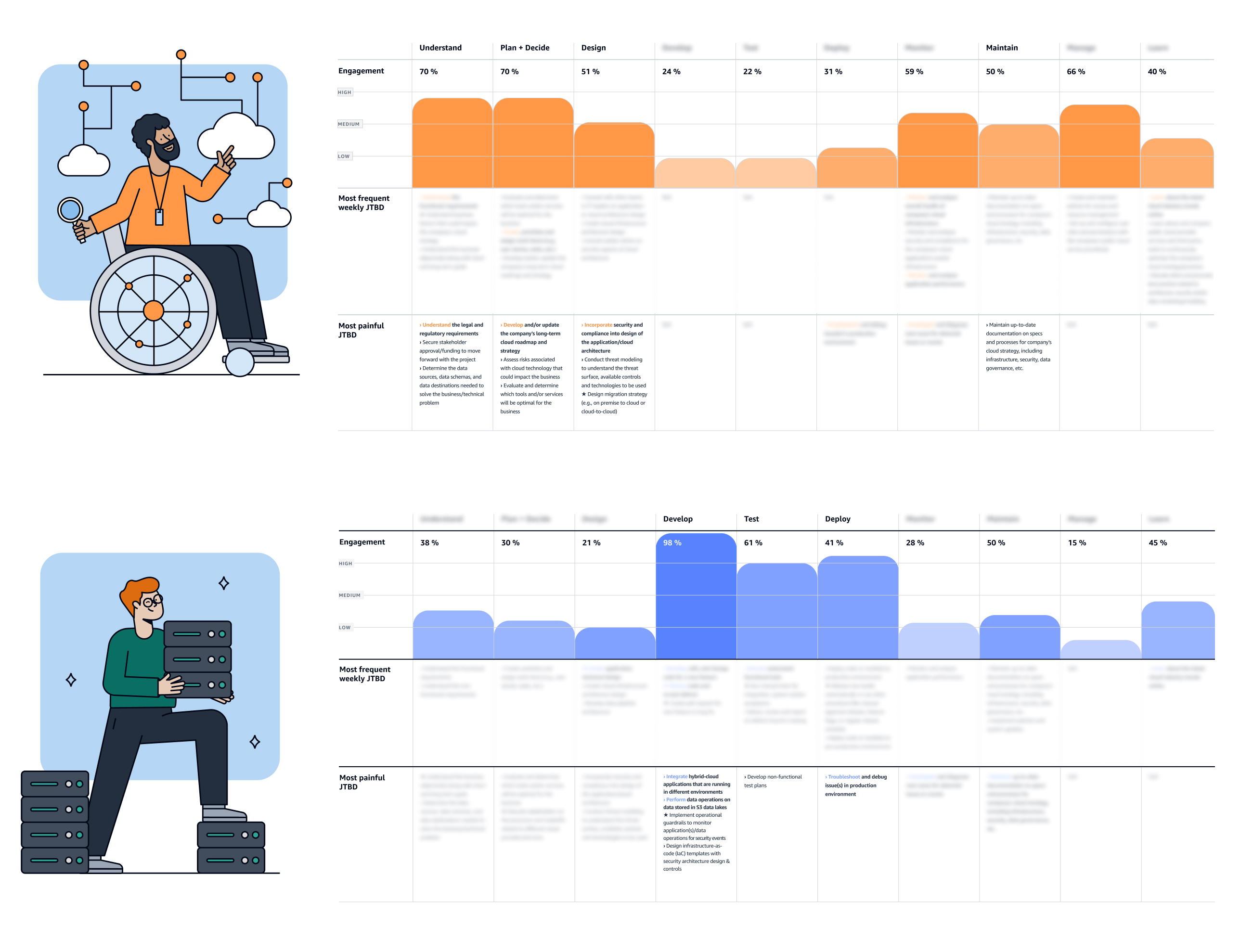
Storage admins spend too much on third-party integrations and duplicate data just to connect services. Developers repeat identical tasks across consoles because there is no unified way to access data.
Pain points
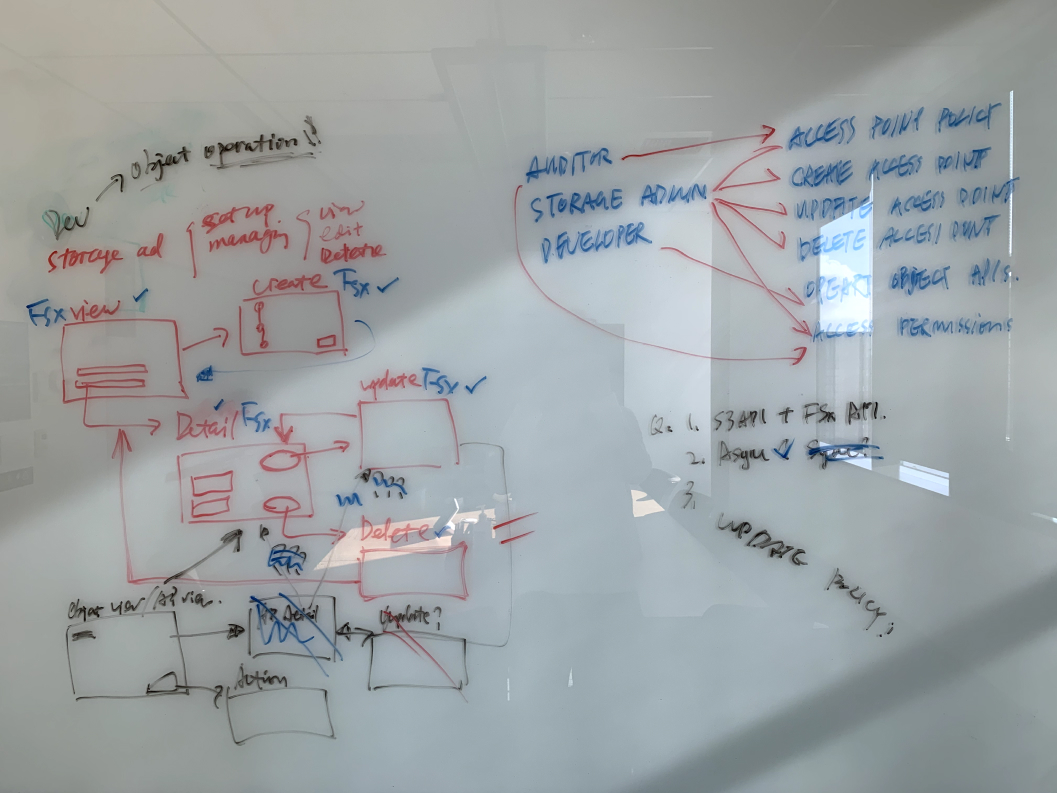
No unified view of access points across storage services, no way to create access points connecting to file systems from the console, and constant page-hopping to view and manage resources.
02Product scoping
I mapped the user journey into prioritized stories that drove a scope decision: what ships at launch vs. what waits. This aligned the team on the three flows that mattered most.
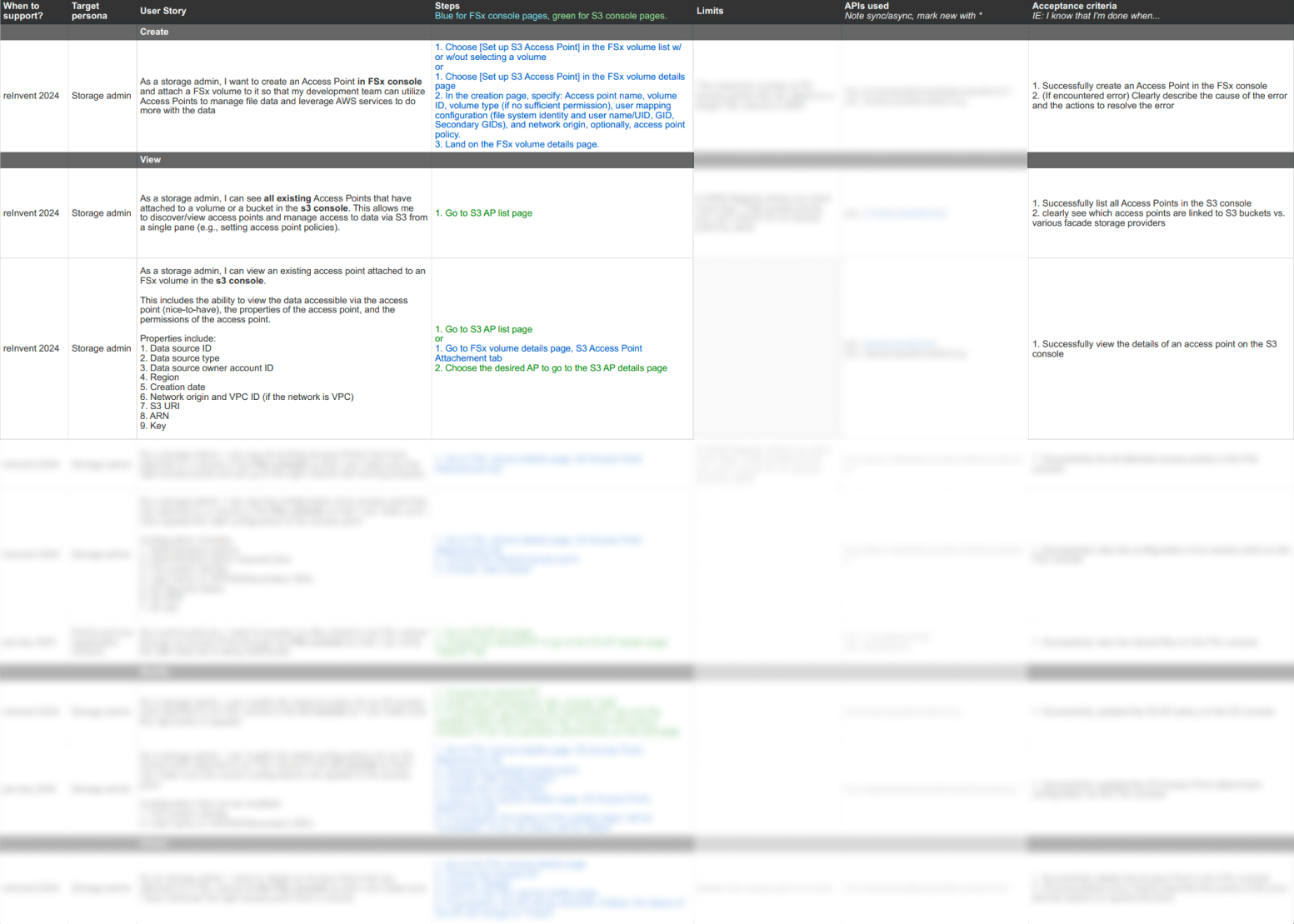
User stories
The full story map exposed 20+ user needs across three services. This gave the team a shared view of the full scope and let us draw the launch boundary.
User flows
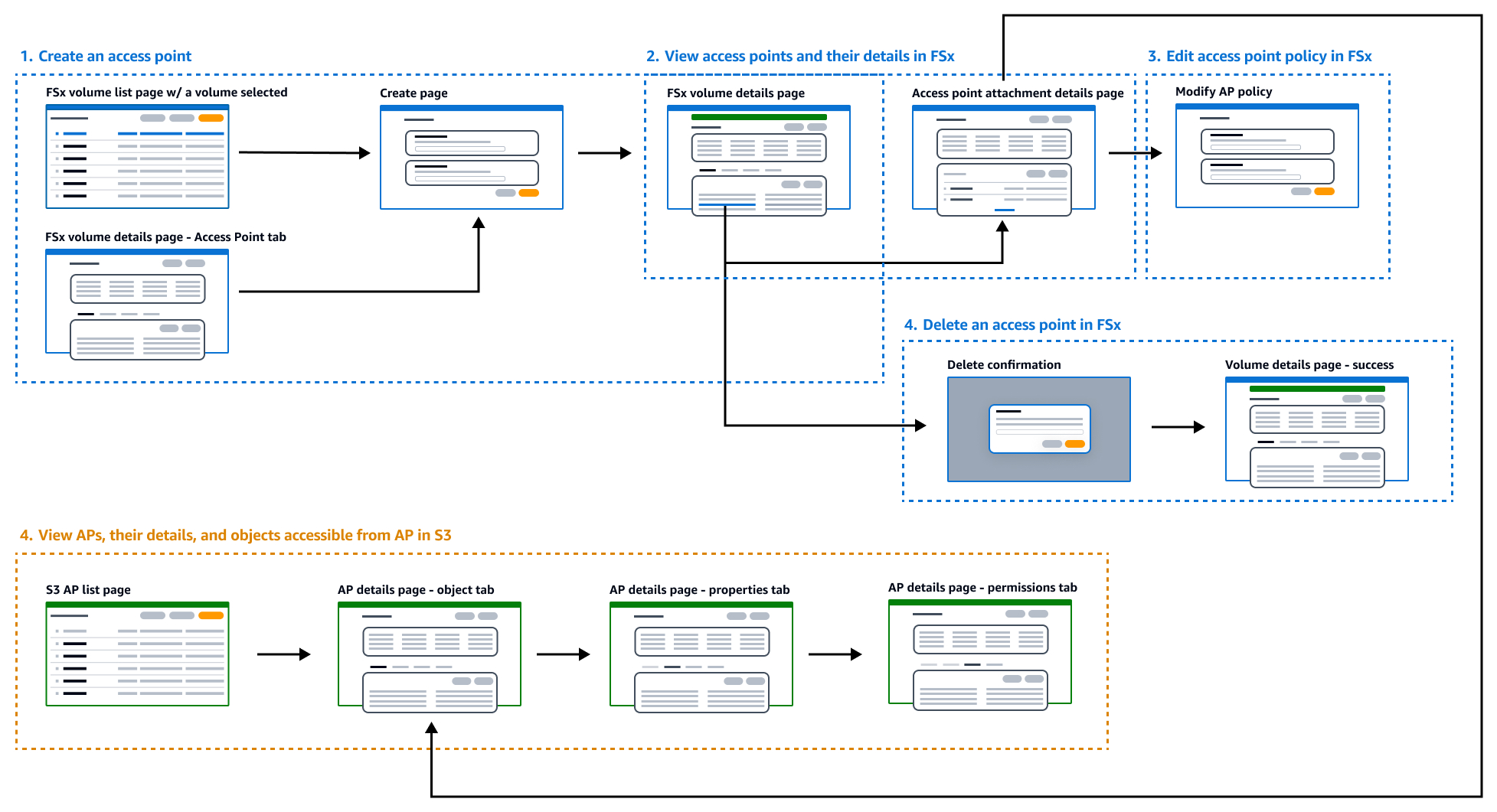
I mapped each priority flow end-to-end, illustrating how each flow fits into the overall experience.
03Design evolution
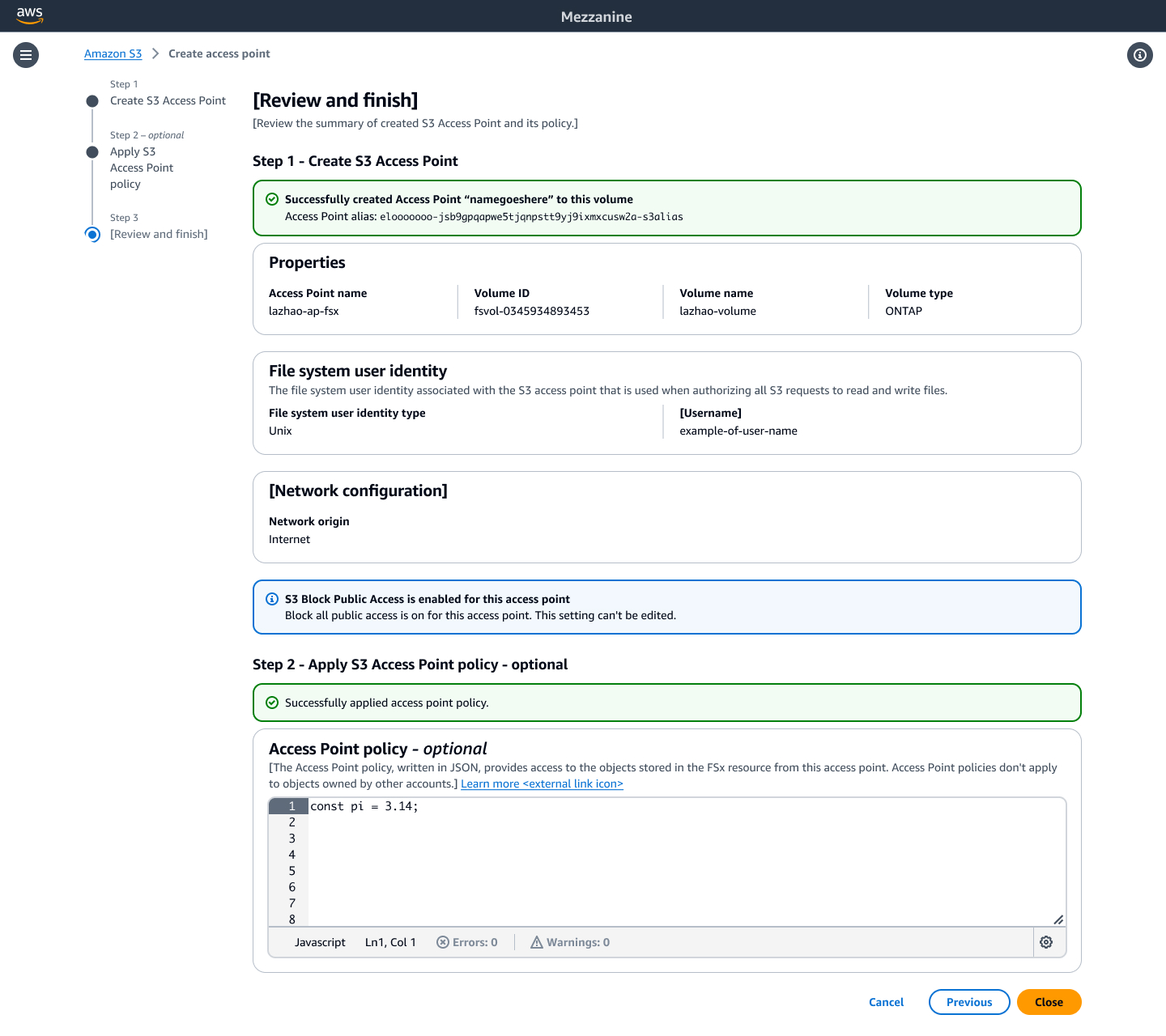
Internal testing exposed a critical flaw: 40% of multi-step setups failed midway, and customers lost all their progress. I advocated for a pattern that surfaces every required step upfront and runs each API call independently, so a single failure no longer cascades. Follow-up testing validated the approach, and Access Point creation success rose to 79%.
Exploration
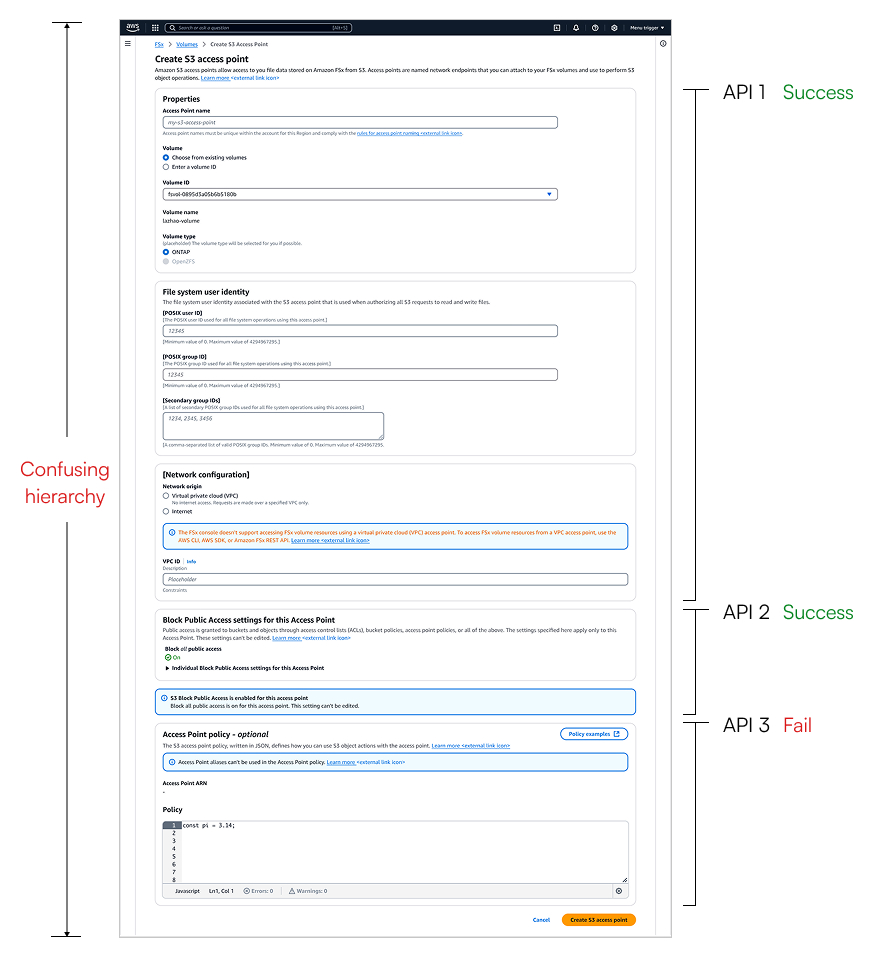
During internal testing, the creation flow broke mid-way when one API in the chain failed. Customers found it frustrating that they lost their input and had no way to tell what succeeded and what didn't.
Trade-offs
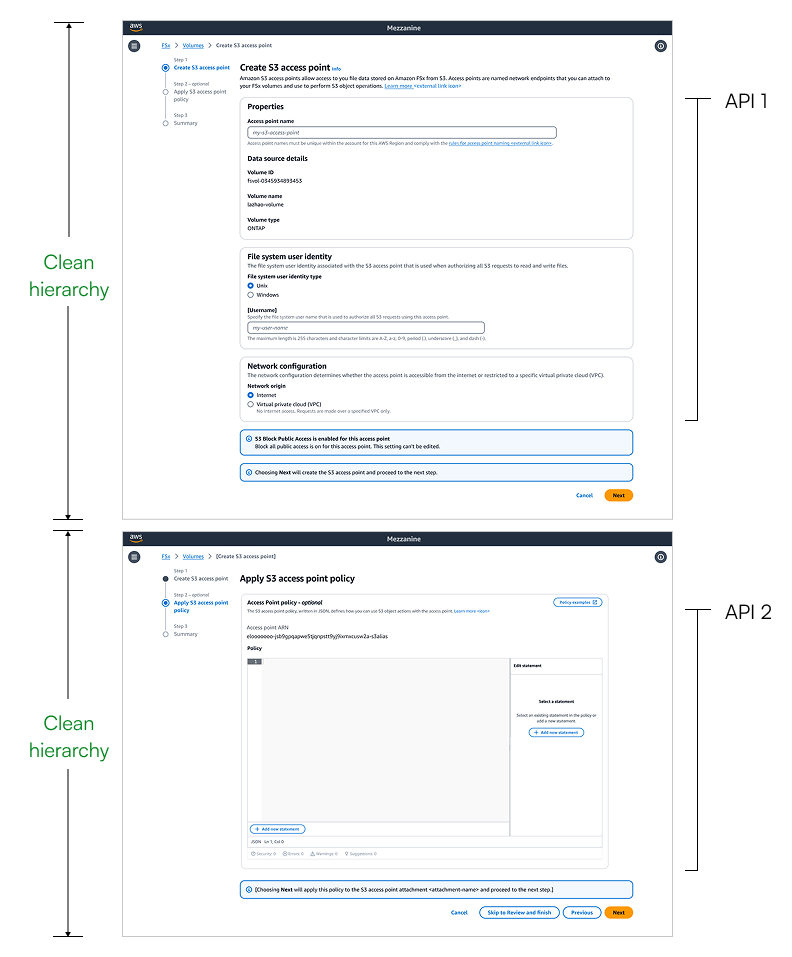
The original sequential flow was simpler to build but fragile. Surfacing all steps upfront added complexity to the UI, but gave customers a clear picture of what was required and let the service call one API at a time.
Decision
I pushed for a pattern that displays the full list of required steps during creation. Each API call runs independently, so a single failure doesn't cascade. Follow-up testing proved the pattern was clear and robust.
04Outcome
A unified console that collapses months of custom pipeline work into a guided flow, letting customers set up and access data across three storage services in minutes.
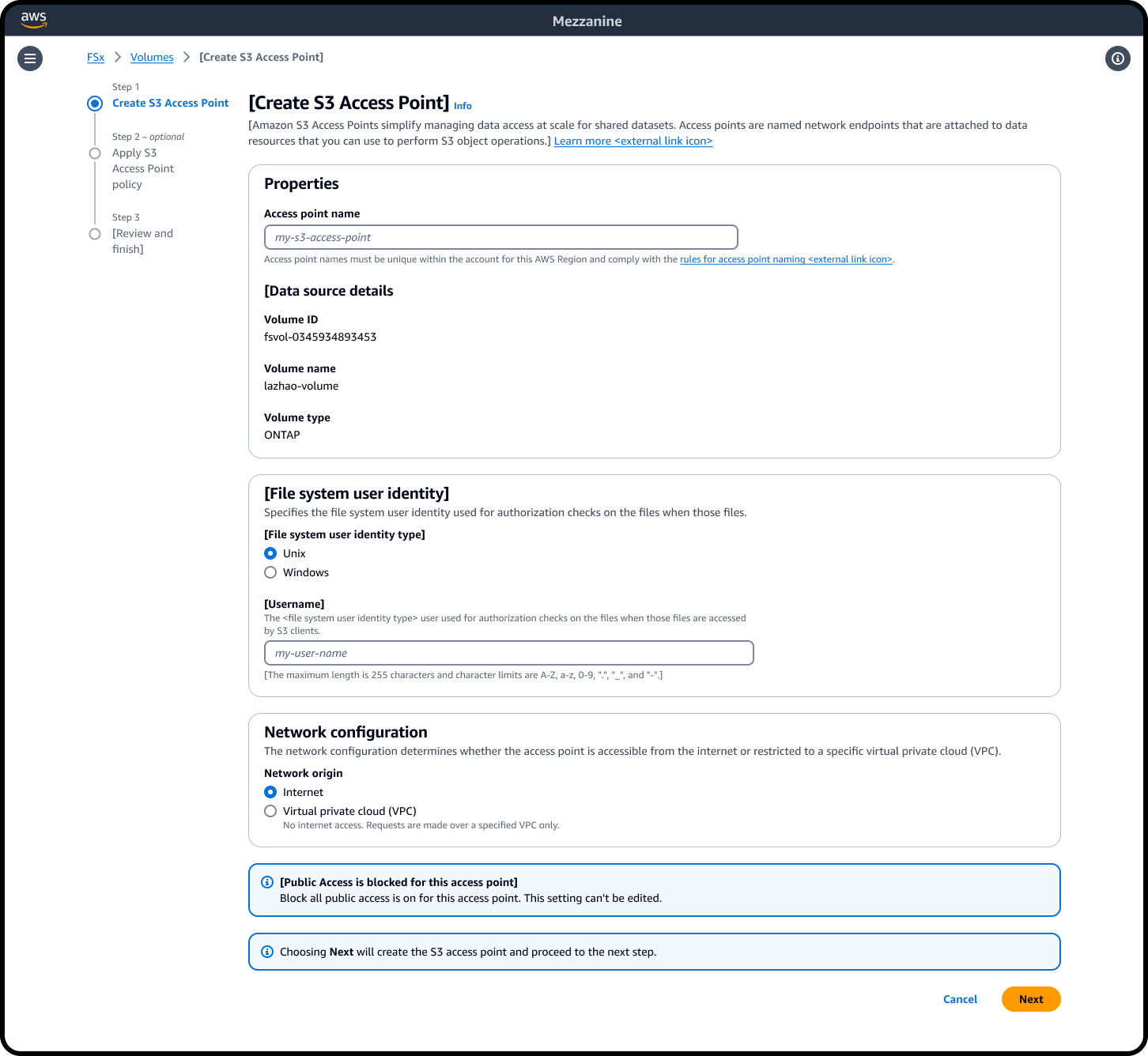
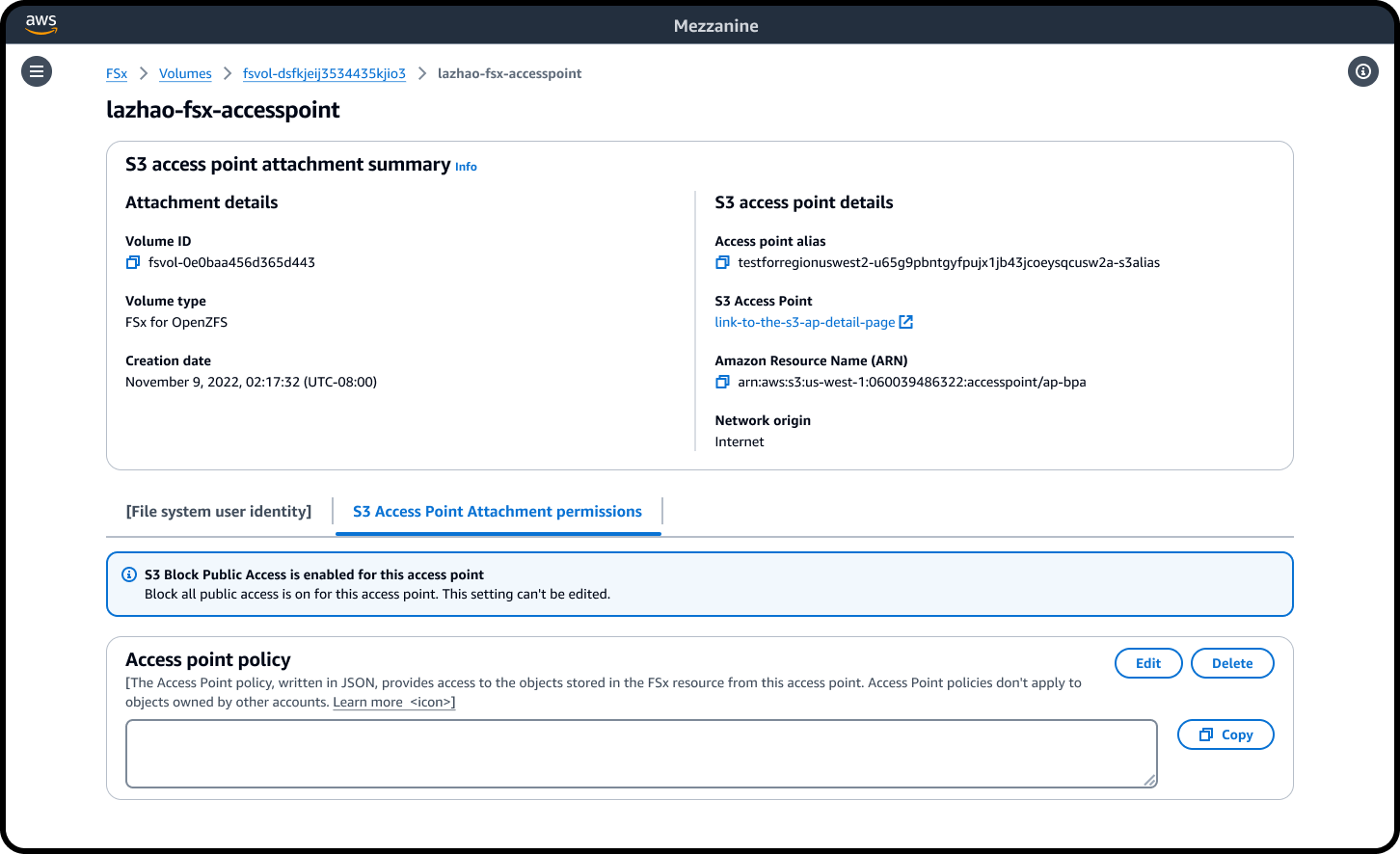
Streamlined infrastructure setup
Storage admins can now set up their infrastructure directly within the AWS console. No more third-party applications needed.
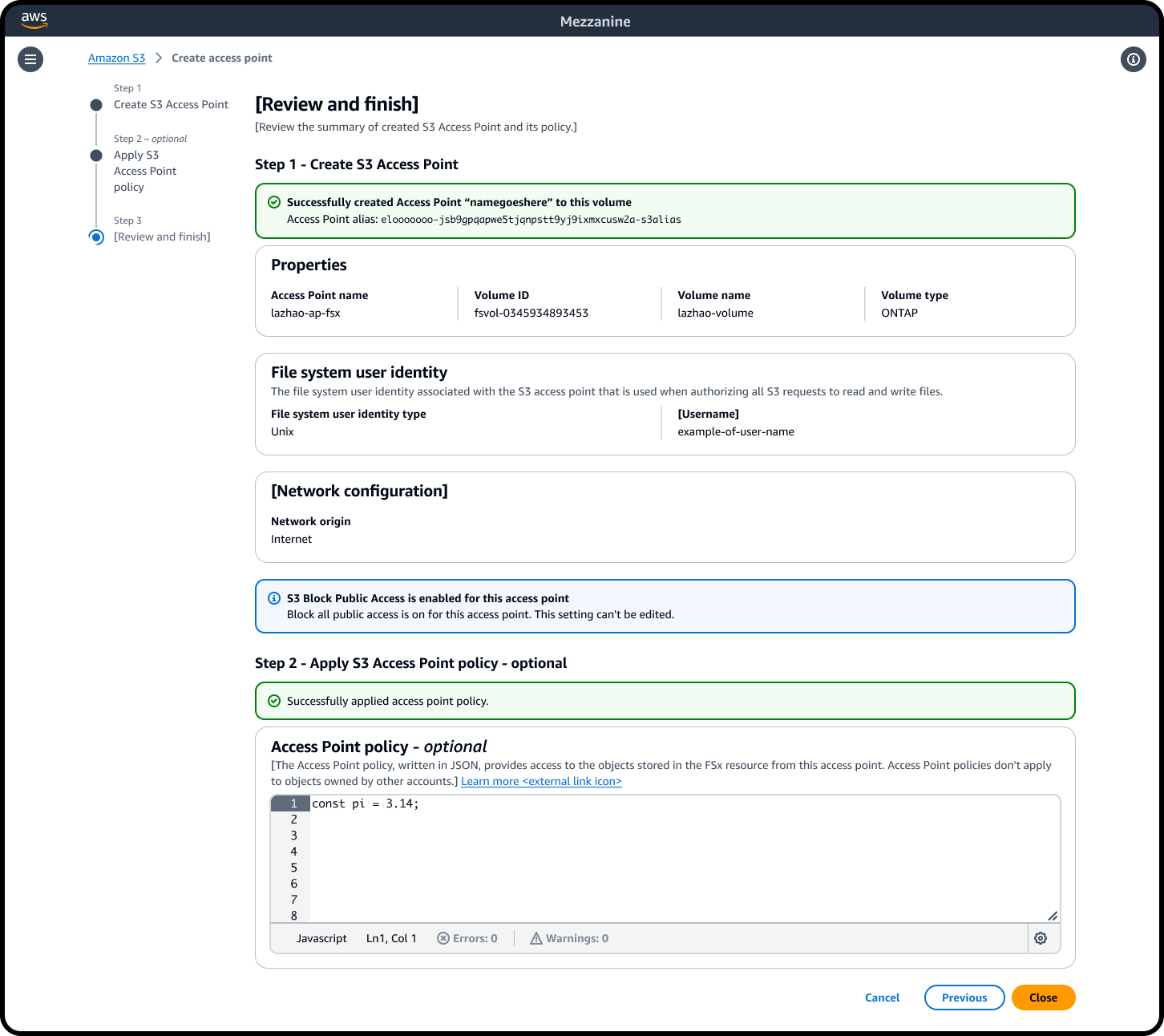
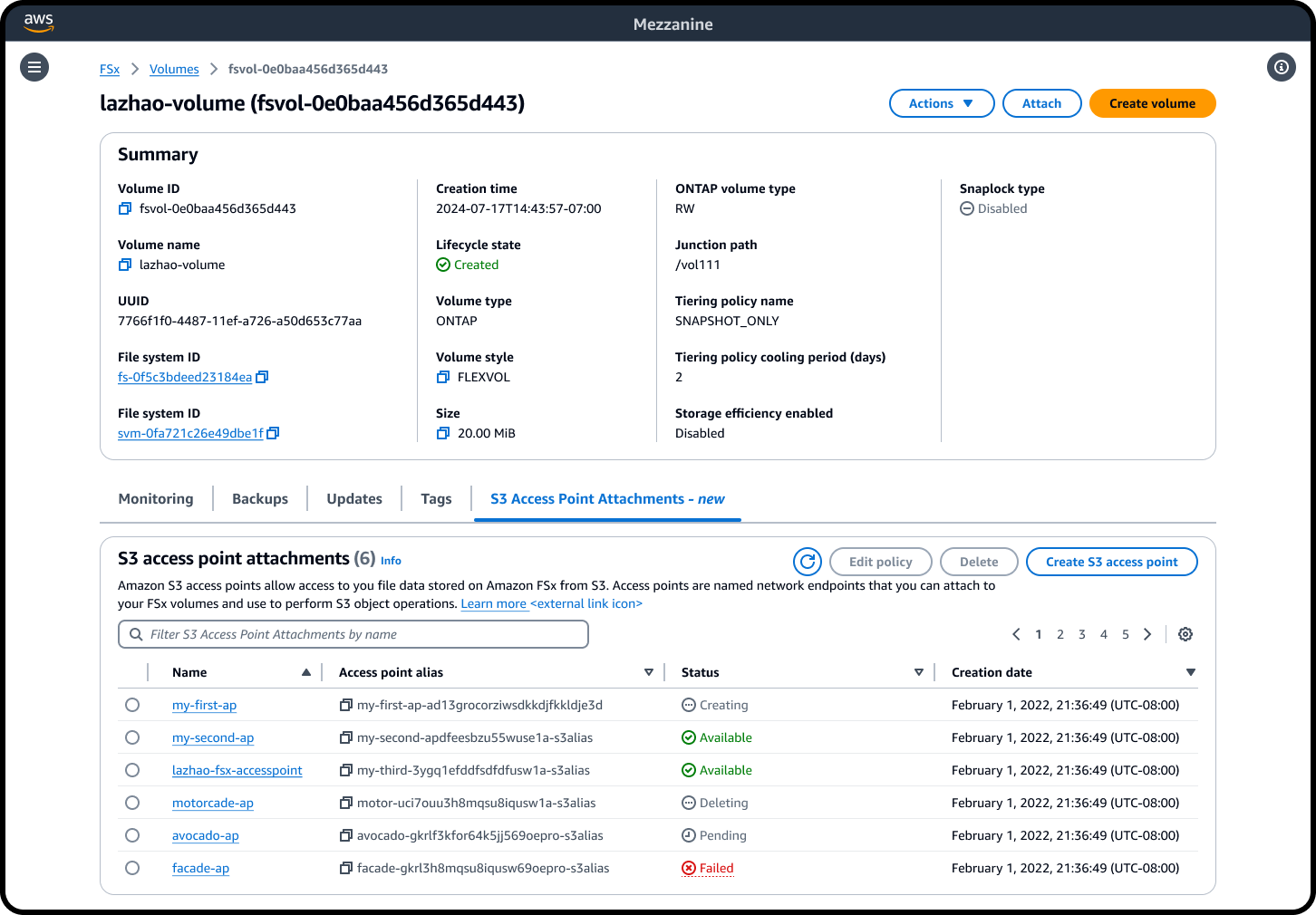
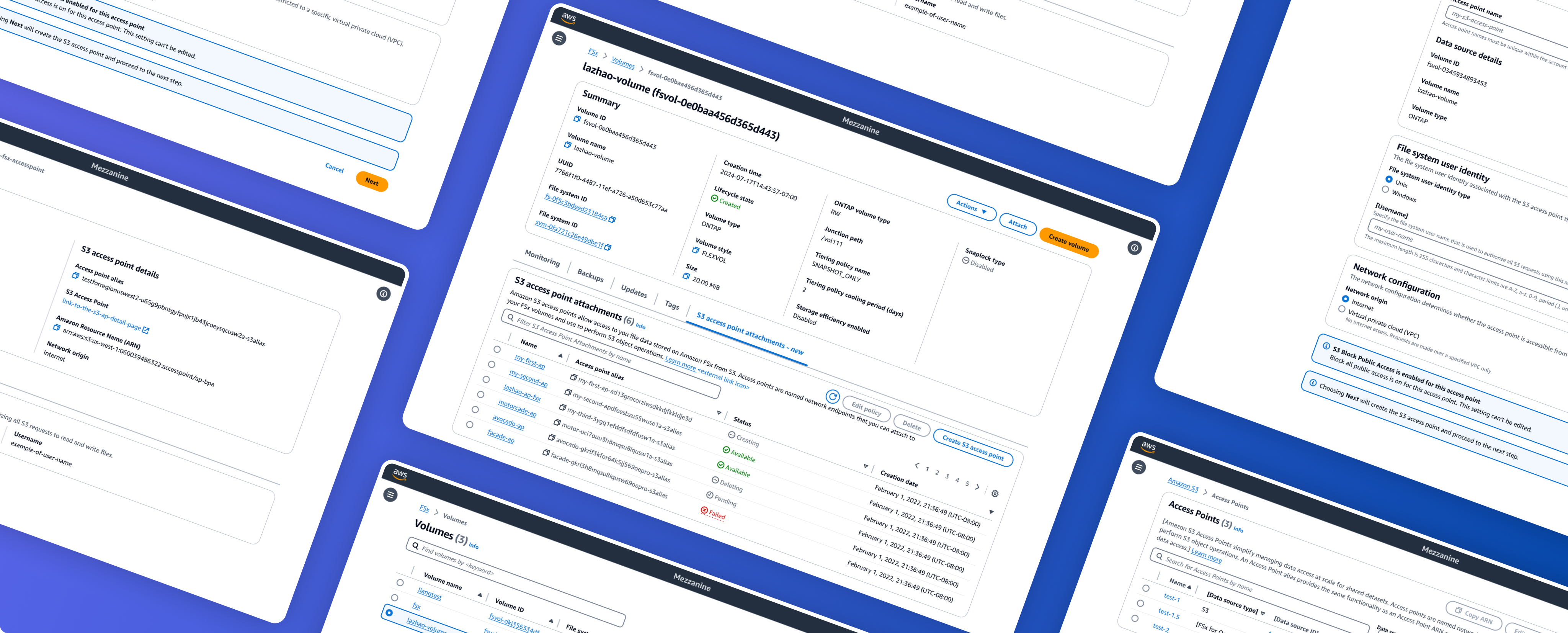
Unified data operations
Developers can now view and manage all the data operations and security-related tasks in a single console. No more switching among storage services.
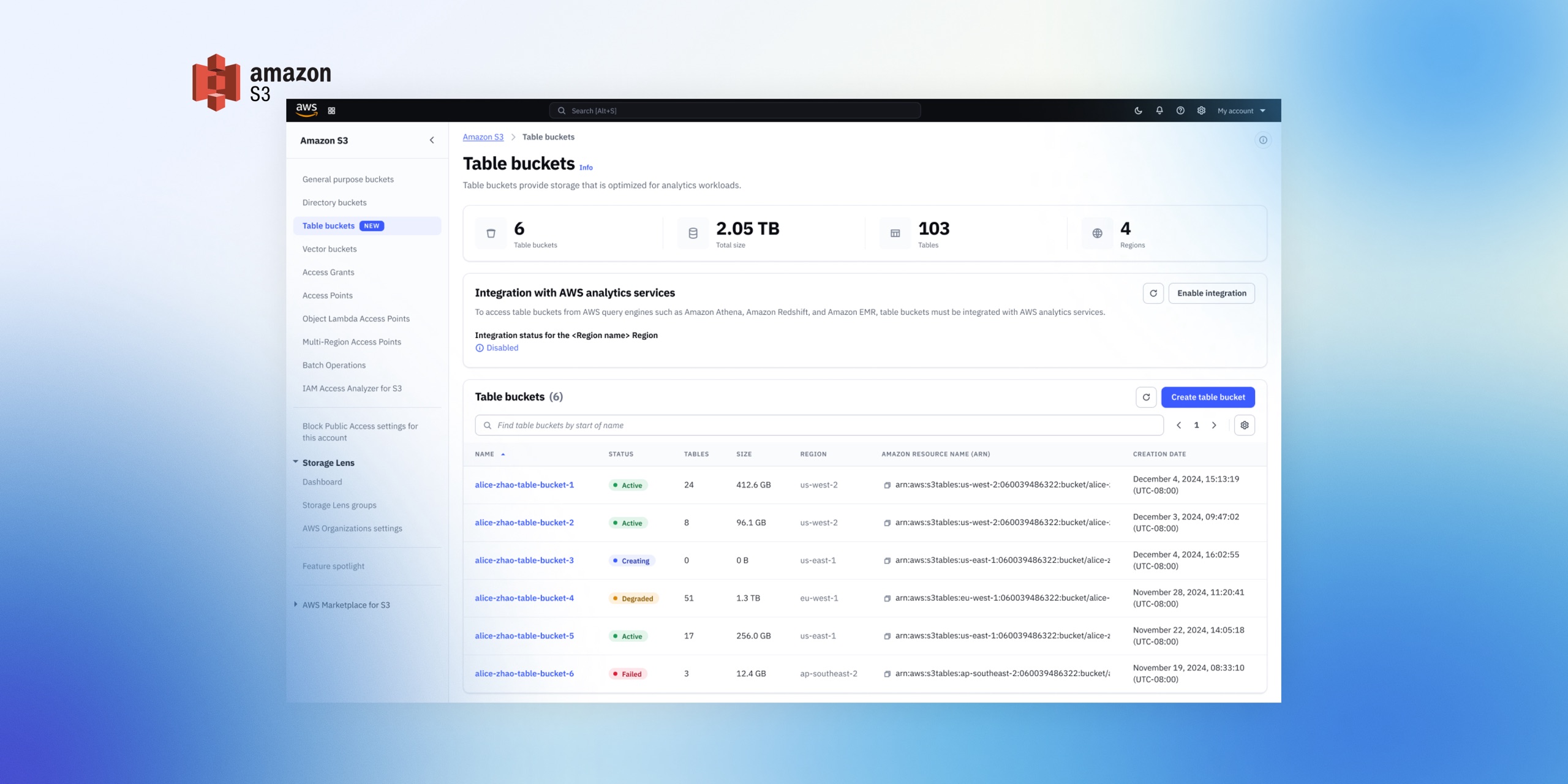
AWS S3 Tables: turn big data into insights in one click
I led the UX for S3 Tables, shaping its core user experience, from concept to launch in 8 weeks, resulting in 500+ TB stored in the first 6 months.
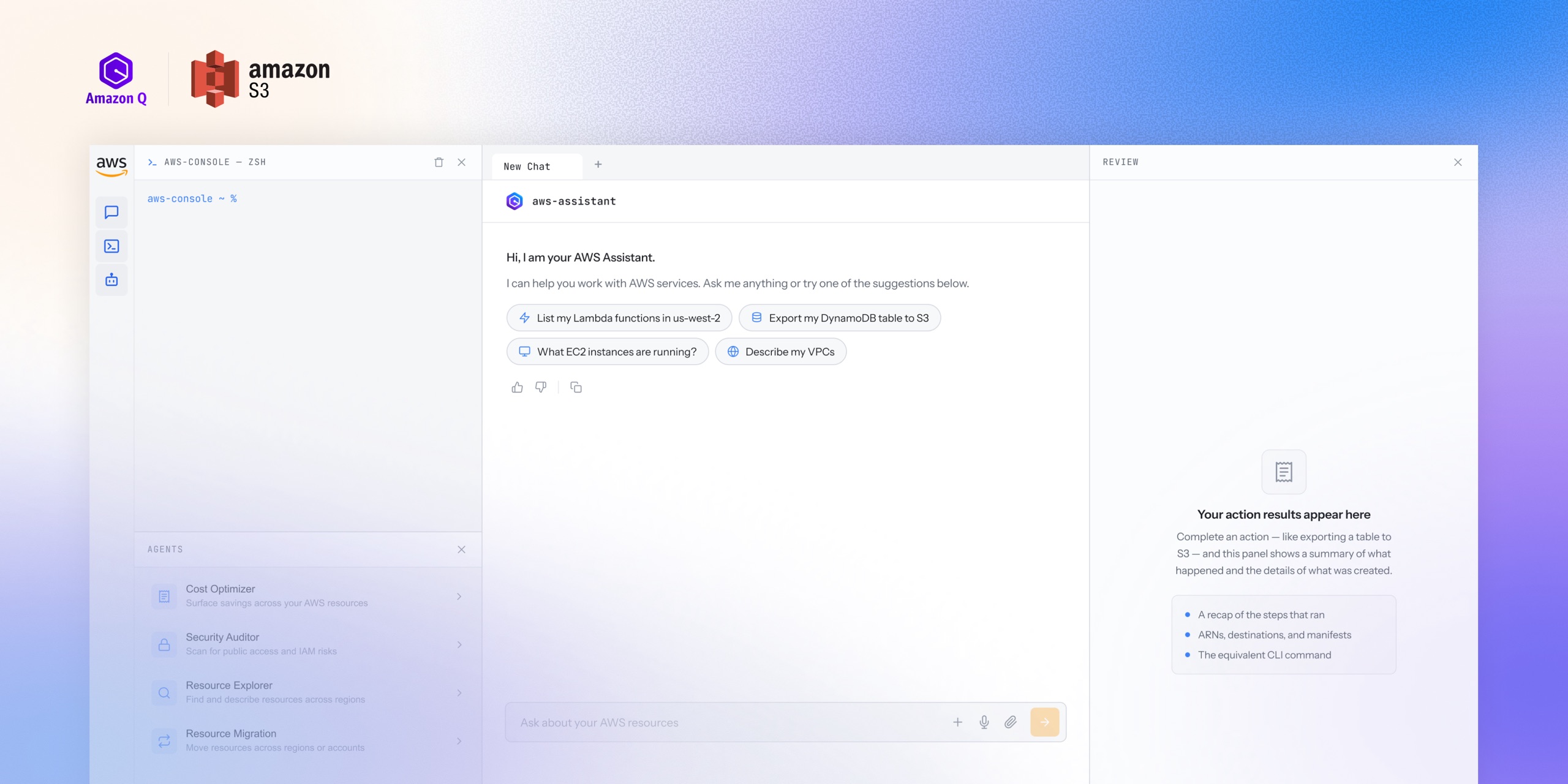
Amazon Q assistant
I led UX for an agentic layer that makes AWS purpose-driven, not service-driven, reducing task completion time by 20%.